A Fountain Pen
That Writes the Way It Should
A German-engineered nib, flawless from the first stroke — for daily notes or considered calligraphy.
Discover the Fountain Pen

A German-engineered nib, flawless from the first stroke — for daily notes or considered calligraphy.
Discover the Fountain Pen


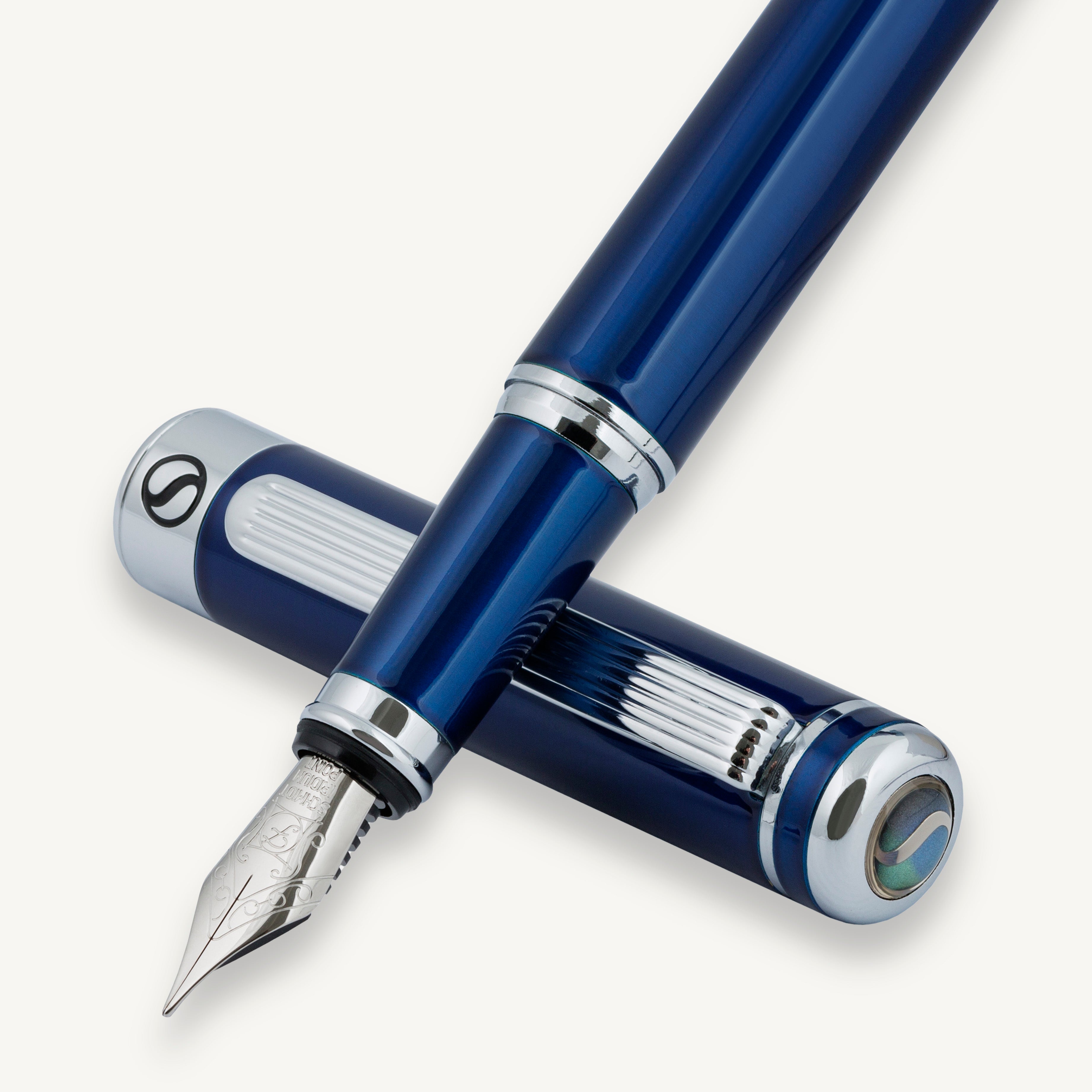
The nib is the pen
A fountain pen lives or dies by its nib, so it's the one component Scriveiner never compromises on. Every nib and converter is engineered in Germany, by the same manufacturer trusted by several of the world's most established pen houses: designed to glide, not scratch, across the page, whether you're taking quick notes, journaling about something important or practising calligraphy.
Choose your refill method: a converter for bottled ink, or standard pre-filled cartridges — both included.

German-engineered
writing core
the nib, the feed and the converter

Solid brass
body
balanced for writing control

CARTRIDGE OR CONVERTER
compatible with standard-size refills

PRESENTED
BEAUTIFULLY
elegant gift box, with spare ink cartridges

RELIABLE WARRANTY
lifetime mechanical, 2-year replacement, 30-day refund
The "you need to break it in" advice around cheap fountain pens is usually covering for a nib that was never right to begin with — poor tine alignment, a low-grade iridium tip, or a manufacturing process that skipped a finishing stage to hit a price point. A scratchy nib doesn't smooth out with time. It was manufactured that way, and it stays that way.
Scriveiner nibs are aligned and tested individually before they ship, using the same German-engineered tipping material found in far more expensive pens. That's why ours write cleanly from the first stroke — not because you're expected to wear it in, but because it was made correctly from the start.
Because there's nothing to break in. A scratchy nib is scratchy because the tines weren't aligned correctly or the tipping material was a cheaper grade to begin with — time on paper doesn't fix either of those, it just wears the rough edges down slowly, which is where the "break-in period" myth comes from.
Every Scriveiner nib is aligned and tested individually before it ships, using the same grade of tipping material found in far more expensive pens. That's why it writes cleanly from the first line, not because you've earned it, but because it was manufactured correctly from the start.
Yes, and for a specific reason: most people's first bad experience with a fountain pen is a nib that skips or catches, which has nothing to do with technique and everything to do with nib quality. Ours is engineered to be forgiving of variations in hand pressure and angle, so a first-time user gets a smooth line without needing to learn the exact grip and pressure a lower-quality nib demands.
Standard international cartridges, so you're not locked into ordering refills from us specifically. If you'd rather use bottled ink — for a wider colour range, or just because you enjoy the ritual of filling a pen — the included converter handles that instead. Both ship with every pen, so the choice is yours from day one rather than an upgrade you have to seek out.
Genuinely, yes, and this is worth explaining rather than just asserting. Left-handed writers tend to push the nib across the page rather than pull it, which is exactly the angle that exposes a poorly ground or misaligned nib — it catches, skips, or feels scratchy specifically at that push angle. Because our nibs are individually aligned and tested rather than mass-finished, they hold up at that angle the way they do at any other, which is why left-handed customers report the same smooth first stroke as everyone else, rather than the workaround-required experience common with cheaper nibs.
If you're using the converter with bottled ink, an occasional rinse (roughly every one to two ink changes, more often if you switch ink colours) keeps the flow consistent. If you're using standard cartridges, there's essentially no maintenance beyond swapping the cartridge when it runs dry. Neither option demands the fussing over cleaning schedules that puts some people off fountain pens in general.
